
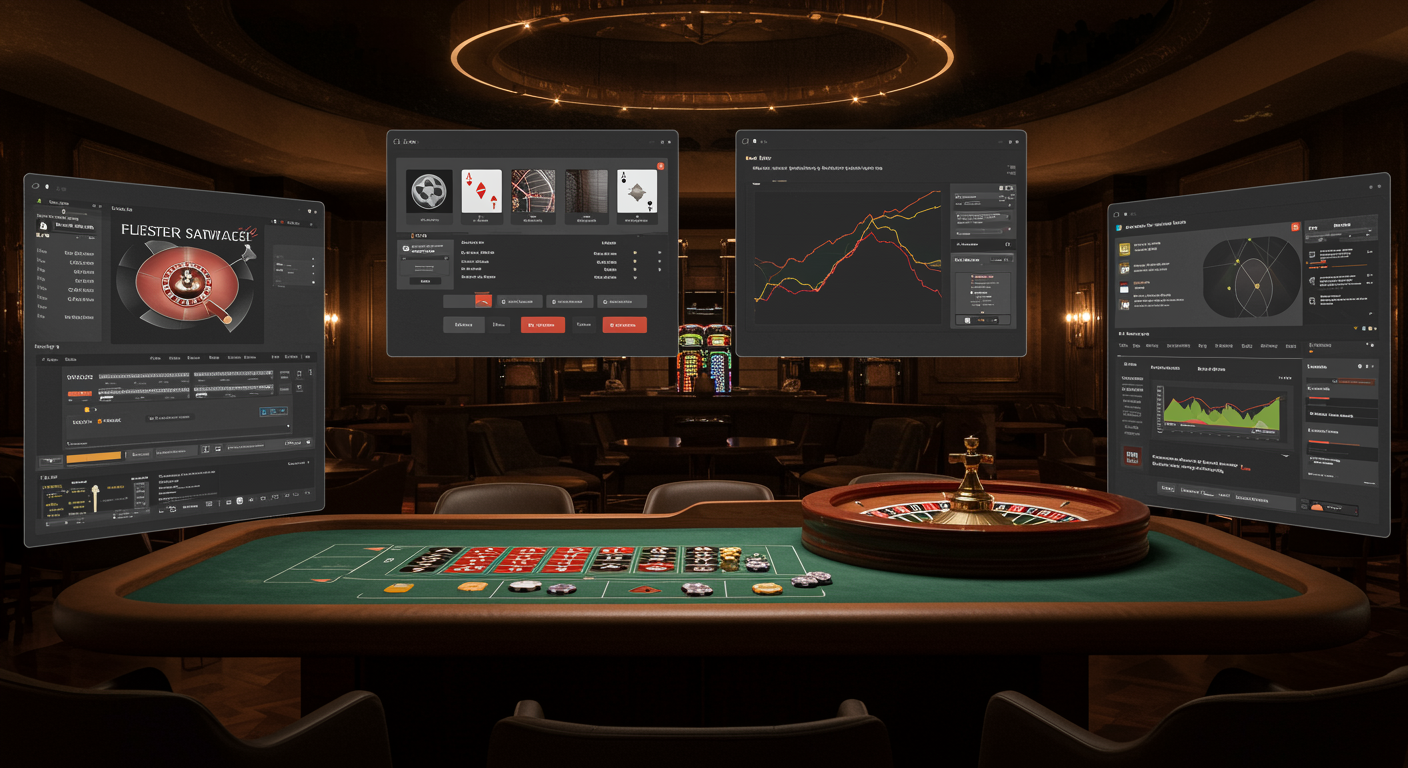
Casino platforms, whether digital or physical, are not assembled randomly. Every interface, table layout, and navigation choice is the result of deliberate planning. While players often focus on games themselves, the experience is shaped long before any interaction begins — through structure, positioning, and design logic.
Understanding how casino platforms are built offers insight into how modern gaming environments function. From online lobbies to live dealer studios and land-based floors, the goal is consistency, clarity, and controlled flow.
This article explores how casino platforms are designed to guide player experience without relying on chance or outcomes.
The Concept of Player Flow
At the core of casino design is a concept known as player flow. Flow refers to how easily a user moves through an environment — whether that environment is a physical casino floor or an online platform interface.
In land-based casinos, flow is shaped by pathways, lighting, table placement, and seating arrangements. In digital platforms, it is created through menus, categories, visual hierarchy, and screen transitions. In both cases, the objective is the same: reduce friction and maintain continuity.
When flow is disrupted, players feel confusion or fatigue. When flow is smooth, interaction feels natural and uninterrupted.
Online Casino Lobby Design
The online casino lobby is the digital equivalent of a casino entrance. It sets expectations and establishes structure.
Most platforms organize their lobbies into clear categories such as slots, table games, live casino, and featured content. This organization is not arbitrary. Categorization helps users quickly understand what is available without being overwhelmed.
Visual hierarchy plays a significant role here. Larger thumbnails, highlighted sections, and consistent iconography guide attention. Even color choices are often standardized to separate sections and indicate importance.
While designs may vary, successful platforms prioritize clarity over complexity.
Live Casino and Interface Positioning
Live casino environments introduce an additional layer of design complexity. These platforms combine real-world elements with digital interfaces.
Camera angles, dealer positioning, and table layouts are carefully selected to maintain visual balance. The interface overlays — such as betting options and timers — are designed to remain accessible without obstructing the view.
Consistency is crucial. Players should not need to relearn controls when switching between tables or games. Uniform layouts help maintain familiarity, reducing cognitive effort and improving overall comfort.
Physical Casino Layouts and Spatial Planning
Land-based casinos rely heavily on spatial design. Table placement, aisle width, seating orientation, and lighting are all used to guide movement and interaction.
High-traffic games are typically placed in visible, accessible areas, while quieter spaces are designed for longer engagement. Seating is positioned to balance comfort with accessibility, allowing players to engage without feeling confined.
Lighting is another important factor. Warm, controlled lighting creates focus without causing fatigue, while brighter areas signal entry points or transitions.
These design choices work together to create an environment that feels intuitive rather than forced.
Mobile Versus Desktop Experience
As mobile gaming continues to dominate the iGaming industry, platform design has adapted accordingly.
Mobile interfaces prioritize simplicity. Navigation is streamlined, buttons are larger, and content is stacked vertically. Desktop platforms, by contrast, often present more information at once, taking advantage of larger screens.
Despite these differences, consistency across devices is essential. Users expect familiar layouts and functionality regardless of platform. Successful casino systems ensure that core interactions remain unchanged while adapting presentation to the device.
Behavioral Design Without Promotion
Casino platform design often incorporates behavioral considerations, but not always in obvious ways.
Elements such as consistent spacing, predictable navigation patterns, and visual balance help users feel oriented and in control. Reducing unnecessary decisions lowers mental effort, allowing users to focus on interaction rather than navigation.
Importantly, these design choices are not inherently promotional. They are standard usability principles applied across many digital industries, including e-commerce, streaming platforms, and financial applications.
In casinos, usability supports engagement by making systems understandable rather than overwhelming.
The Role of Regulation in Platform Design
Regulatory requirements play a significant role in shaping casino platforms. Different regions impose rules regarding information visibility, user verification, and interface behavior.
As a result, platforms must balance usability with compliance. Certain elements must remain visible, accessible, or restricted depending on jurisdiction. This often influences layout decisions and interaction flow.
Understanding these constraints helps explain why platforms sometimes differ in appearance despite offering similar content.
Why Structure Matters More Than Games
Games may attract initial interest, but structure sustains interaction. A well-designed platform allows users to navigate confidently, understand available options, and move between environments without confusion.
When structure fails, even high-quality content struggles to retain attention. This principle applies equally to digital and physical casinos.
By focusing on design logic rather than surface features, it becomes easier to understand why certain platforms feel intuitive while others do not.
Observing the Framework
Casino platforms are systems first and entertainment spaces second. Their success depends on how effectively they guide experience through layout, interface design, and environmental planning.
FitSeat approaches these environments from a neutral standpoint — observing structure rather than outcomes. By examining how platforms are built, it becomes possible to understand the industry beyond games and results.
In the end, the experience is shaped not by chance, but by design.